Living in Bowness, Calgary: Homes, Prices & What It's Really Like
Bowness gives you river frontage and space for money that buys far less elsewhere. The commute is the bill, and the flood maps are the homework.

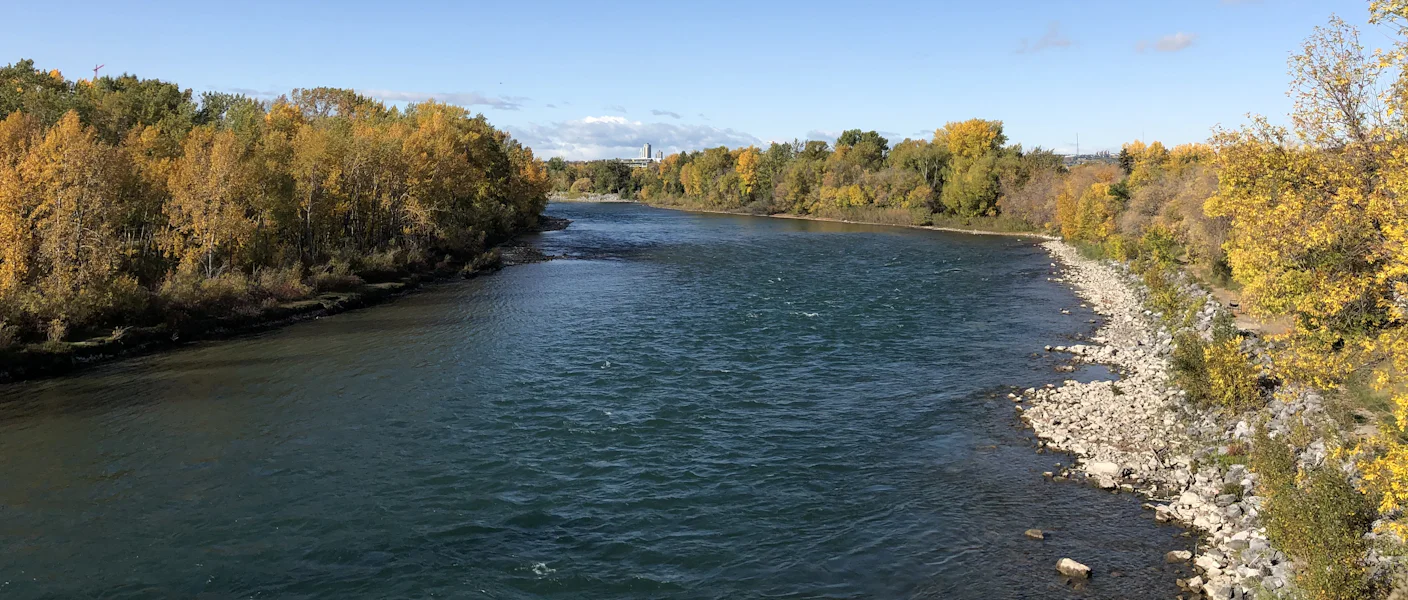
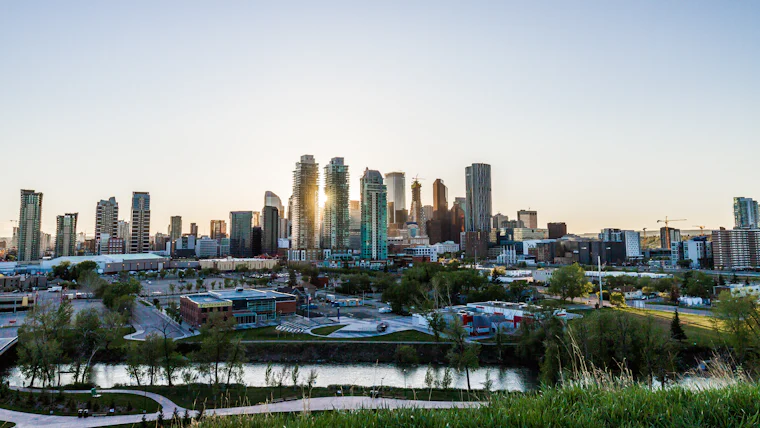
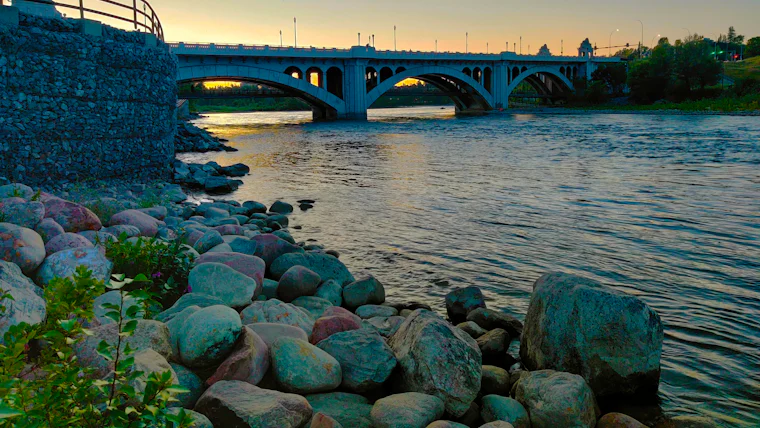
Bowness was its own town until 1963, and it still does not feel like the rest of Calgary. It sits in the northwest with the Bow River along its north and east edges, the Trans-Canada to the south, and a park at the centre of it that people drive across the city to use.
What you get here is space and river access for money that buys considerably less closer in. What you pay is time — this is the longest commute of the communities buyers usually weigh against each other.
What Bowness is actually like
The independent-town history matters. Bowness has a main street, its own history, and a settled character that reads as a small town absorbed by a city rather than a suburb built by one. It is quieter and lower-key than the inner-city communities, and residents tend to be there deliberately.
The housing is a broad mix: original post-war stock, a steady wave of infill, and riverfront property that behaves like its own market. Lots are generally larger than anything you will find inner-city, which is a substantial part of the appeal.
Bowness Park is the anchor. Canoeing and the lagoon in summer, skating in winter, and busy in both. A genuine year-round amenity of the kind most Calgary communities do not have.
Homes for sale in Bowness right now
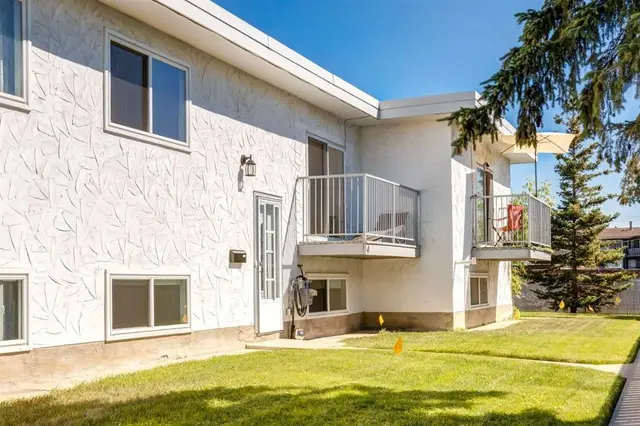 $289,900 4503 75 Street NW2 bd · 2 ba · 504 sqft
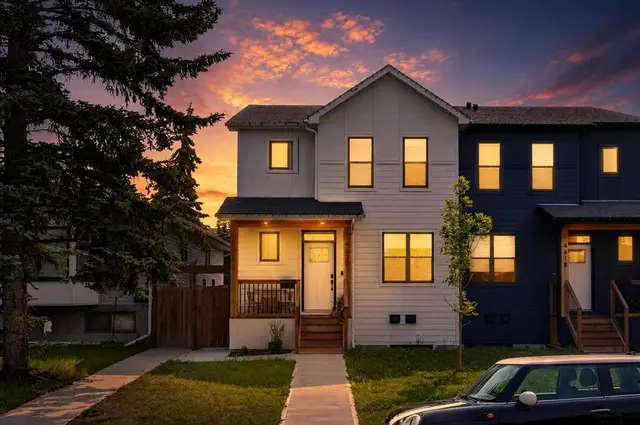 $799,000 4620 81 Street NW4 bd · 4 ba · 1,783 sqft
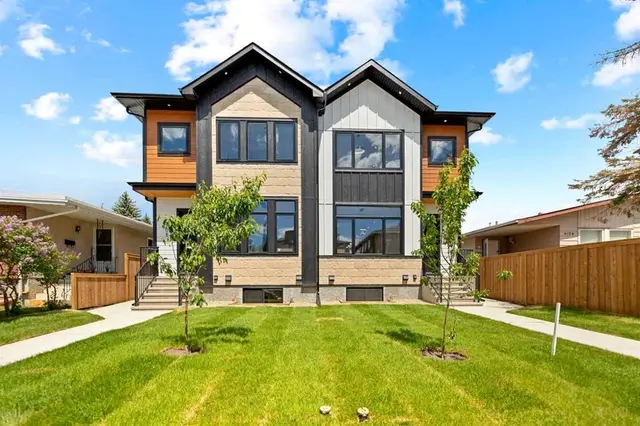 $895,000
 $899,9008106 47 Avenue NW5 bd · 4 ba · 1,917 sqft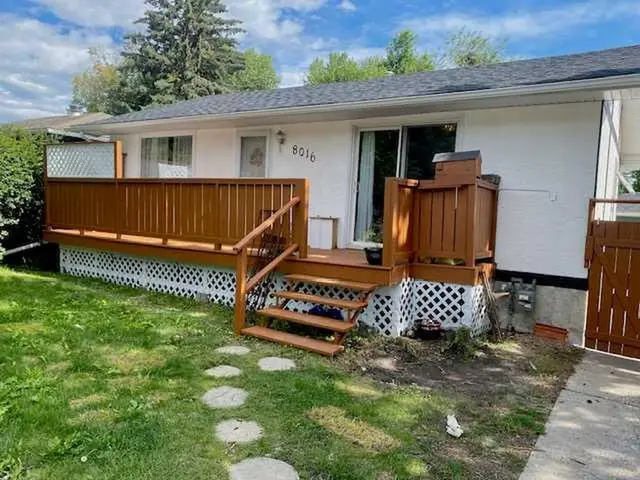 $600,000
 $625,0008016 33 Avenue NW4 bd · 2 ba · 1,233 sqft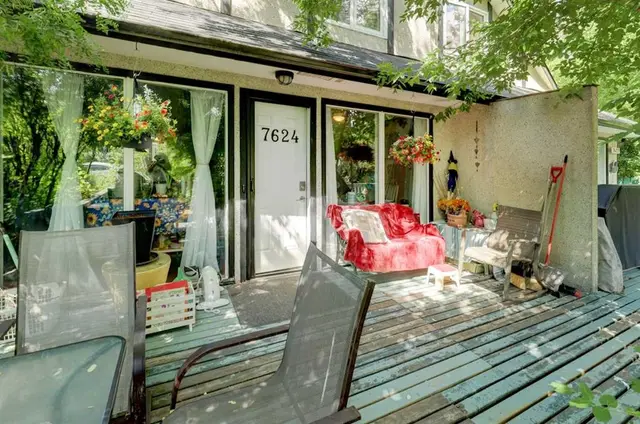 $470,000 7624 34 Avenue NW4 bd · 3 ba · 1,052 sqft
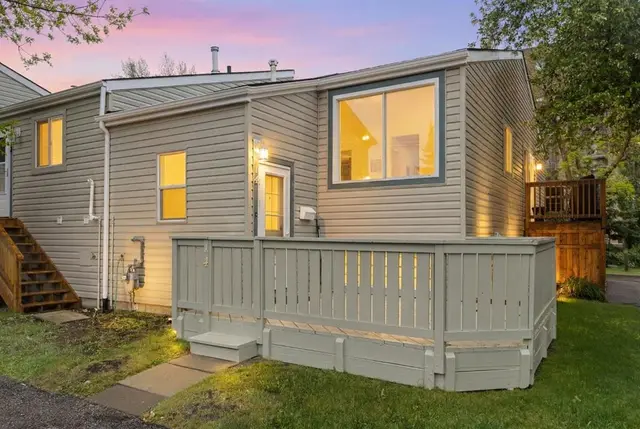 $310,000
 $339,9008544 48 Avenue NW #143 bd · 2 ba · 488 sqft
The flood question
Parts of Bowness sit near the Bow and the community has flood history. Newer riverfront construction here frequently incorporates mitigation by design — homes built on pilings, without basements — and that is not an aesthetic choice.
Before making an offer on any Bowness property, particularly anything close to the river:
- Check the City of Calgary flood maps for the exact address. Exposure varies sharply within the community.
- Confirm insurance availability and pricing in writing, early.
- Understand what mitigation the property has, and price the absence of it accordingly.
Done properly this is manageable. Skipped, it is the most expensive mistake available in this postal code.
What homes cost here
Bowness prices below the inner-city communities and gives you more land for it. The market splits between original stock on generous lots, infill product, and riverfront — with riverfront pricing on a logic of its own, driven by the view and the frontage rather than the square footage.
The live figures above show the current spread. Look at the gap between minimum and maximum: in Bowness that range genuinely reflects two different markets sharing a postal code.
Who Bowness suits — and who it doesn't
It suits you if you want a bigger lot, river access, and a quieter pace; you work in the northwest, west, or from home; you would actually use a park like Bowness weekly; or you want to be near the mountains and value a shorter run out to Kananaskis and Banff.
Look elsewhere if
- You commute downtown daily. This is the whole caveat and it is not a small one. Drive it at 7:45am before you fall in love with the park.
- You want amenity density. Bowness has a main street, not a scene. Compare it to Bridgeland's 1st Avenue and the difference is stark.
- Flood diligence is something you would rather not do. It is real work here.
- You want rail. There is no LRT station in the community.
Getting around
The Trans-Canada Highway is the main artery, and the community's position makes westbound trips easy — the mountains are genuinely close, which is a real lifestyle factor for a lot of Calgary households.
Downtown is the weak point. Test the actual commute at the actual time. Transit exists and is workable, but it is not fast, and there is no LRT station in the community.
Within Bowness, the Bow River pathways are the standout, running through the community and connecting into the wider network.
Amenities
- Bowness Park. The centrepiece — canoeing and the lagoon in summer, skating in winter.
- Bow River pathways. Direct access.
- The main street. Everyday services and a handful of genuinely good local businesses.
- Proximity to the mountains. A shorter run west than almost anywhere else in the city.
What to check before you buy here
Bowness rewards diligence more than most Calgary communities, because the stock and the risk both vary so much within it:
- Flood exposure for the exact address, per the section above. This is the first check, not the last.
- Whether the lot is subdividable. Bowness lots are often generous, and subdivision potential is a real component of value. It is also constrained by width, servicing and zoning — confirm rather than assume.
- Age and condition of servicing. Sewer lines, water service and electrical on original stock are frequently at or past end of life. A camera inspection of the sewer line is cheap relative to replacing it.
- The actual commute. Not the map estimate. Drive it at 7:45am on a weekday, then drive home at 5pm. If that is tolerable, everything else about Bowness gets much easier to say yes to.
- Riverfront specifics. Bank stability, setbacks, and what mitigation exists. Riverfront here is its own market with its own questions.
Nearby communities to compare
- Montgomery — adjacent, similar character, closer in.
- Silver Springs and Varsity — north, more suburban, generally more expensive.
- Greenwood/Greenbriar — nearby and considerably more affordable.
Live counts and drive times sit on the Bowness community page. If the commute turns out to be the sticking point, the Calgary neighbourhood comparison covers the closer-in options, and the Renfrew guide is the nearest thing to Bowness value with an inner-city commute.
The honest summary
Bowness is a genuinely good buy for the right household and a genuinely poor one for the wrong household, and the dividing line is almost entirely the commute.
If you work downtown five days a week, the park will not compensate. If you do not, Bowness offers space, a river, a real park and a distinct community identity for money that would buy a much smaller life closer in.
Thinking about this community?
Sahil will tell you what the listing data doesn’t — what actually trades, what sits, and what a place is worth paying up for.
Common questions
Is Bowness a good place to live?
For buyers who want river access, a real park, larger lots and a quieter pace, and who do not commute downtown daily, Bowness is one of the better value propositions in Calgary. The commute is the genuine cost and it is the thing most likely to make someone regret the purchase.
Does Bowness flood?
Parts of Bowness sit near the Bow River and the community has flood history. Newer riverfront construction frequently uses design mitigation — homes on pilings, no basements — precisely because of it. Check the City of Calgary flood maps for the specific address and confirm insurance availability and cost before you go firm.
How far is Bowness from downtown Calgary?
It is the longest commute of the communities usually compared against it, out in the northwest with the Trans-Canada as the main route. Test the drive at the exact time you would actually be making it — off-peak numbers are misleading here.
What is there to do in Bowness?
Bowness Park is the centrepiece and it is genuinely year-round — canoeing and the lagoon in summer, skating in winter. The Bow River pathways run through, and the community keeps a distinct small-town character it retained from being an independent town until 1963.