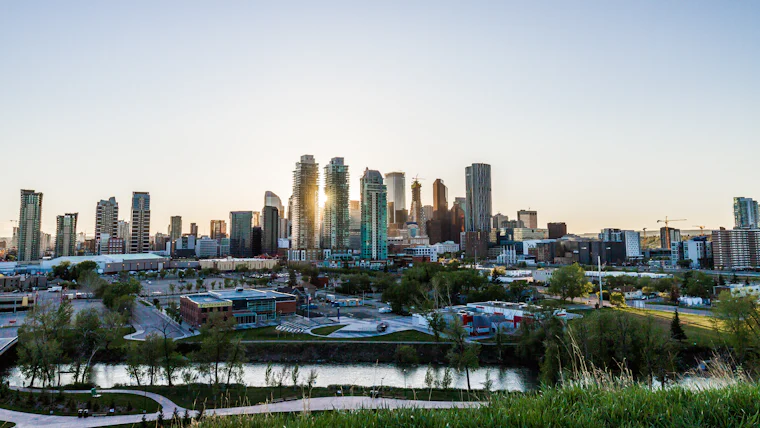
Living in Renfrew, Calgary: Homes, Prices & What It's Really Like
Renfrew is where Bridgeland buyers go when the price stops working. Same proximity, more land, fewer restaurants, and a community still halfway through its rebuild.


Renfrew is the answer to a very specific question: what do you do when you want Bridgeland and the numbers do not work?
It sits directly adjacent, just north-east of downtown, established around 1950, with over six thousand residents. The proximity is nearly identical. The land is meaningfully cheaper. What you give up is the finished main street, and how much that matters is the entire decision.
What Renfrew is actually like
Renfrew's signature is the combination people assume they cannot have this close to the core: a modest house on a genuinely large lot, with a yard and a fence, ten minutes from downtown.
That combination has attracted steady infill activity, so the streetscape is mid-transition — original post-war houses next to new builds, with more of the latter arriving each year. If you want a community that is finished today, this is not it. If you are comfortable buying a trajectory, that transition is most of the opportunity.
The community is quieter and more residential than Bridgeland next door. It is a neighbourhood people live in rather than one people visit.
Homes for sale in Renfrew right now
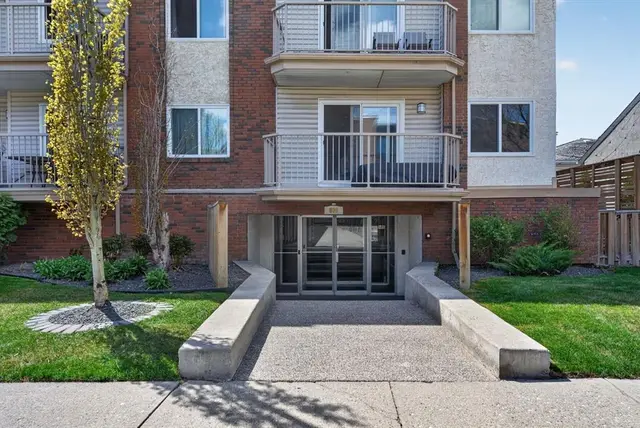 $190,000
 $195,000809 4 Street NE #2022 bd · 1 ba · 731 sqft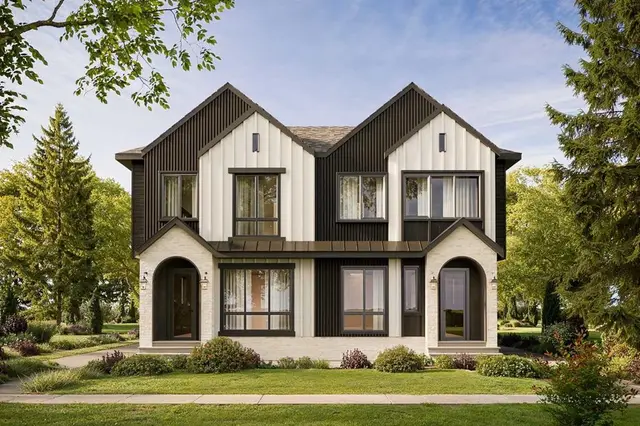 $729,900 521 15 Avenue NE #24 bd · 4 ba · 1,281 sqft
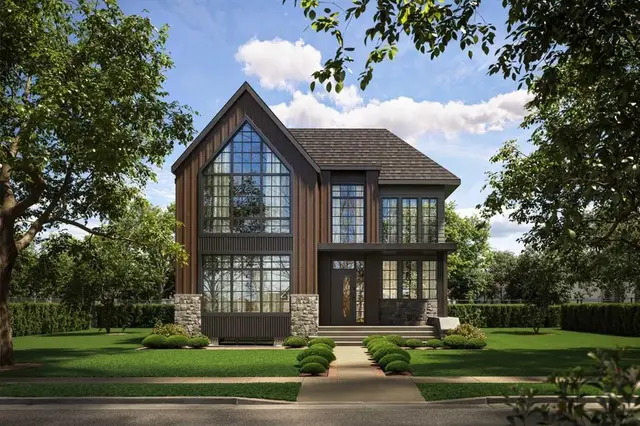 $2,449,900 1140 Regent Crescent NE5 bd · 5 ba · 3,387 sqft
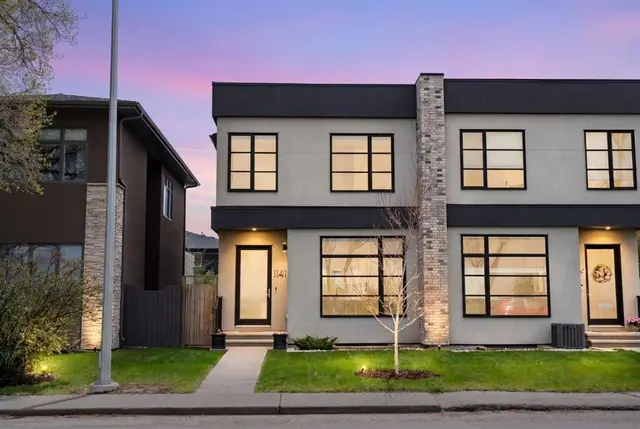 $959,900
 $974,9001141 Renfrew Drive NE4 bd · 4 ba · 1,967 sqft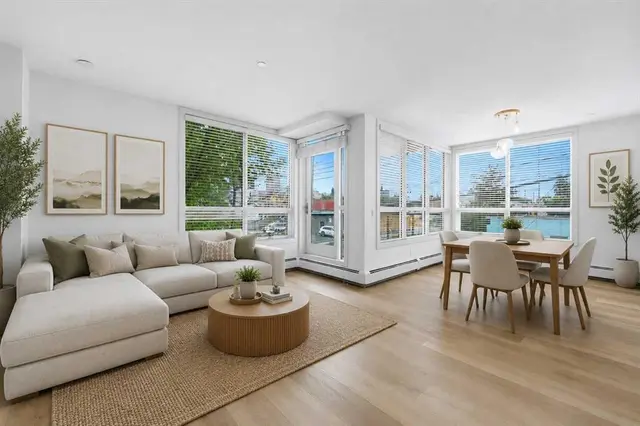 $390,000 805 4 Street NE #2072 bd · 1 ba · 940 sqft
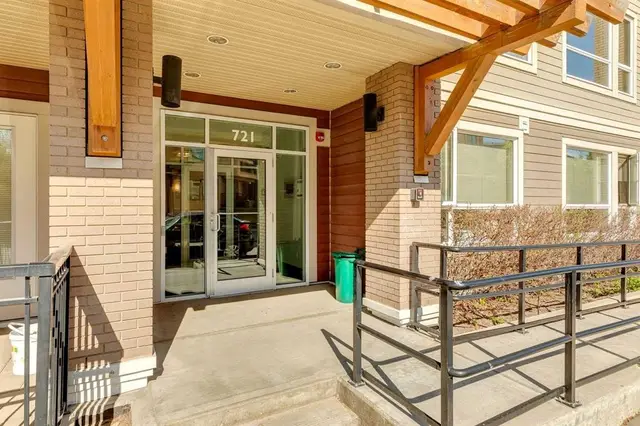 $399,000
 $427,500721 4 Street NE #1312 bd · 2 ba · 918 sqft
What homes cost here
The stock is a mix of original single-family homes, modern infills, and a growing supply of condos. The original houses are frequently modest buildings on generous lots, which makes them attractive to both renovators and rebuilders — and means listing prices often reflect land value more than house value.
Compare the live median above against the Bridgeland guide. That gap is the trade, stated plainly: proximity held roughly constant, amenities and finish reduced, price reduced with them.
What actually drives price here
Renfrew pricing is less about the house than buyers expect, and understanding that changes what you should be looking at.
Lot size and width do most of the work. Because so much of the stock is modest housing on generous land, a large share of what you pay is the ground. Two houses of near-identical size and condition can differ substantially in price because one lot can be subdivided or accommodate a wider build and the other cannot. If you are shopping here, learn to read lot dimensions before you read square footage.
Position relative to the Trans-Canada matters more than the map suggests. Traffic noise falls off quickly with distance and screening, and it is priced in. A few blocks changes both the sound and the number.
New versus original is close to a binary. There is a modern infill market and an original-stock market operating in the same community, and they behave differently — the infills price against Bridgeland, the original stock prices against land value. Comparing across the two produces nonsense.
Downtown views. Parts of Renfrew sit high enough for a genuine skyline view, and where that exists it carries a real premium that has nothing to do with the building.
Who Renfrew suits — and who it doesn't
It suits you if you want a detached house with a yard near downtown; you are willing to renovate or rebuild; you are comfortable in a community mid-transition; or you want inner-city access at the lowest realistic entry point.
Look elsewhere if
- Walkable dining is why you are buying inner-city. Renfrew is near Bridgeland's main street, not on it. If you want to step outside into a scene, pay for Bridgeland.
- You want a settled streetscape. Construction is ongoing and will be for years.
- You want prestige. Renfrew is sensible and well-located. It is not a status address.
- You need everything walkable. Amenity density is thinner here than in the communities it competes with.
Getting around
Downtown is close — a short drive, and a reasonable bike ride via the Bow River pathways. The Trans-Canada runs along the north edge for east-west travel, and Bridgeland's CTrain station is nearby rather than in the community.
The commute is one of Renfrew's genuine strengths, and it is why the value here is worth taking seriously rather than dismissing as a cheaper postal code.
Amenities
- Bridgeland's main street. Not in Renfrew, but close enough to use regularly.
- Bow River pathways. Nearby, connecting into the city network.
- Renfrew Aquatic and Recreation Centre. A real community facility.
- Telus Spark and the science centre area. Adjacent.
- Downtown. Close enough to count as an amenity.
What to check before you buy here
Renfrew is a community in the middle of its rebuild, and that shapes the diligence:
- Lot dimensions and subdivision potential. The large-lot-modest-house combination is the whole appeal, and how much of that lot you could actually use is the difference between a good buy and an expensive one. Confirm width, servicing and zoning.
- Active permits nearby. You are buying into ongoing construction. That is fine — it is why the value exists — but know what is coming next door rather than discovering it after possession.
- The condition of original stock. Post-war houses that have not been updated carry the usual sequence: furnace, roof, windows, panel, sewer line. Price it before you offer, not after.
- Noise from the Trans-Canada. Exposure varies sharply by where in the community you are. Stand on the property with the traffic running.
Nearby communities to compare
- Bridgeland — adjacent, more expensive, the main street Renfrew borrows. The Bridgeland guide explains what that premium actually buys.
- Inglewood — similar era, more character, more retail, plus flood considerations. See the Inglewood guide.
- Mount Pleasant and Tuxedo Park — north, similar age and value logic.
- Crescent Heights — west, more established, more expensive.
Live counts and drive times are on the Renfrew community page, and the Calgary neighbourhood comparison sets Renfrew against the alternatives on price and commute.
The honest summary
Renfrew is the most straightforward value play near downtown Calgary. You are not getting away with anything — the discount is compensation for a less complete community, and it is priced roughly correctly.
Take it if you want land and proximity and are content to walk five minutes further for dinner. Skip it if the walk was the point.
Thinking about this community?
Sahil will tell you what the listing data doesn’t — what actually trades, what sits, and what a place is worth paying up for.
Common questions
Is Renfrew a good place to live?
For a buyer who wants inner-city proximity with a detached house and a yard, and who does not need a main street on their doorstep, Renfrew is one of the best-value options near the core. It is a weaker fit for anyone whose reason for buying inner-city is walkable dining.
Is Renfrew cheaper than Bridgeland?
Generally yes, on land in particular, which is why it has attracted steady infill activity. You are paying less because the amenity build-out is less complete — not because the market has overlooked it.
Where is Renfrew in Calgary?
Just north-east of downtown, adjacent to Bridgeland, south of the Trans-Canada. It was established around 1950 and holds over six thousand residents.
What kind of homes are in Renfrew?
A mix of original single-family houses — often smaller homes on generous lots — modern infills, and a growing amount of condo product. The combination of a modest house and a large yard close to downtown is the community's signature.